top of page
Producing scientific evidence with social impact
NetLab UFRJ is an internet and social media research laboratory dedicated to diagnosing the phenomenon of digital disinformation and its social consequences in Brazil.


O preço dos anúncios eleitorais na Meta nas eleições de 2026
Artigo e Nota Técnica de Divulgação

Contra dados não há argumentos
Nota pública do
NetLab UFRJ sobre os esclarecimentos da Meta
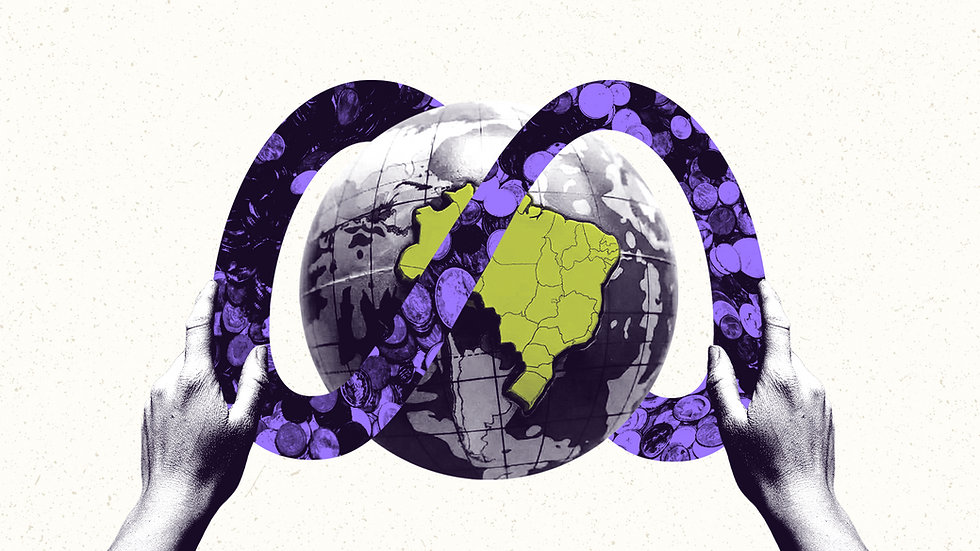
Meta lucra com anúncios irregulares promovidos por redes coordenadas para influenciar as eleições no Brasil
Highlights
NetLab director participates in a CGI.br meeting at the Internet Forum in Brazil
Last Sunday (May 25), Marie Santini, director of the Laboratory for Internet and Social Media Studies at the Federal University of Rio de Janeiro (NetLab UFRJ), participated in an in-person meeting of the Content and Cultural Goods Chamber of the Brazilian Internet Steering Committee (CGI.br), held in Belém, Pará. The meeting was part of "Day Zero" of the 16th edition of the Internet Forum in Brazil (FIB16)—an event that, over the course of five days, brought together represe
Powering the Feed: The Digital Advertising Strategies of Major Energy Companies in Brazil and the UK
Efforts made by fossil fuel companies and other actors with vested interests in the energy sector to shape the public’s understanding of the climate crisis, the energy transition, and their possible solutions have been documented worldwide, spanning communication campaigns, research funding, lobbying, and direct engagement in policymaking. Rather than promoting the scale of structural change required by the climate crisis, high-impact energy companies have increasingly invest
Of Politics and Playbooks: Silencing Disinformation Research(ers) in Times of Autocracy
Taylor & Francis The enforced demise of Clyde Miller’s Institute for Propaganda Analysis—shut down in 1942 under accusations of communist sympathy and insufficient loyalty to the American ideal—resonates today amid coordinated campaigns to silence disinformation researchers. This essay examines these campaigns, focusing particularly on Brazil. It begins by situating disinformation research within a matrix of democracy and autocracy, arguing that under current conditions, disi
Digital Fraud as a Public Security Issue: How Meta Profits from Fraudulent Ads About Public Policies
Data from 2026 indicate that falling victim to an online scam — that is, losing money on the internet or via mobile phone — is one of the top concerns for Brazilians, surpassing even fear of street violence. Electronic fraud already surpasses robbery by number of reported cases in Brazil and its main channel for reaching victims is on social media platforms. The Pix Scams study, conducted by cybersecurity company Silverguard, found that 79% of reported financial fraud cases i
Without Consent: Social Media Ads Promote Fake Sexual Videos of Paolla Oliveira Created Using Artificial Intelligence
Generative artificial intelligence has made it easier to produce and disseminate intimate, non-consensual images. This exacerbates sexual violence against women given the low cost, widespread availability of these tools, and the ease with which images can be distributed across digital platforms. In recent years, NetLab UFRJ has identified fraudulent and abusive advertisements promoted on social media platforms, which profit from the distribution of this content and expand the
“A New Chance to Get Your Finances Back on Track!”: New Desenrola Brasil Program Accompanied by Increase in Fraudulent Ads
Fraudulent advertisements can be understood as a disinformation strategy based on paid content and social engineering techniques to generate revenue, causing financial and reputational harm to users. On social media, this type of advertising often relies on sensationalist language, promises of unrealistic results, prices or discounts far below market value, and AI-manipulated images. Scammers also create fake profiles that imitate official pages or pose as qualified professio
Mapping COVID-19 information and political dynamics on X/Twitter through graph-embedding cartography of large retweet networks
Applied Network Science This paper examines political communication on Brazilian X/Twitter during the early months of the COVID-19 pandemic, a period marked by tensions between federal authorities, state governors, and media actors. We consider how the platform reflects the circulation of policy-related narratives, including controversial positions such as early treatment with hydroxychloroquine. To support the analysis of large-scale interaction data, we construct a retweet
Unequal data access regimes in social media
Political Communication Report The current digital architecture is largely grounded in data regimes, sociotechnical ecosystems that regulate the relationship between digital infrastructures, our online footprint, and private appropriation of public data. Under the current data regime, public social media data is not a freely accessible digital common (Fuster Morell, 2010) but part of broader digital enclosures through which technological corporations extract and fence off com
Brazil’s supreme court on content moderation: national sovereignty versus tech oligarchy
Taylor & Francis Tech oligarchy arises when platform companies are dominated to a singular extent by a small group of very powerful and extremely wealthy men who have played uniquely influential roles in structuring technological development … that align with their personal beliefs and who now wield unprecedented informational, sociotechnical, and political power. (Cohen, 2025) Cohen’s landmark intervention refracts a contemporary zeitgeist of elite capture in which concentr
Destaques
NetLab director participates in a CGI.br meeting at the Internet Forum in Brazil
Last Sunday (May 25), Marie Santini, director of the Laboratory for Internet and Social Media Studies at the Federal University of Rio de Janeiro (NetLab UFRJ), participated in an in-person meeting of the Content and Cultural Goods Chamber of the Brazilian Internet Steering Committee (CGI.br), held in Belém, Pará. The meeting was part of "Day Zero" of the 16th edition of the Internet Forum in Brazil (FIB16)—an event that, over the course of five days, brought together represe
Powering the Feed: The Digital Advertising Strategies of Major Energy Companies in Brazil and the UK
Efforts made by fossil fuel companies and other actors with vested interests in the energy sector to shape the public’s understanding of the climate crisis, the energy transition, and their possible solutions have been documented worldwide, spanning communication campaigns, research funding, lobbying, and direct engagement in policymaking. Rather than promoting the scale of structural change required by the climate crisis, high-impact energy companies have increasingly invest
Of Politics and Playbooks: Silencing Disinformation Research(ers) in Times of Autocracy
Taylor & Francis The enforced demise of Clyde Miller’s Institute for Propaganda Analysis—shut down in 1942 under accusations of communist sympathy and insufficient loyalty to the American ideal—resonates today amid coordinated campaigns to silence disinformation researchers. This essay examines these campaigns, focusing particularly on Brazil. It begins by situating disinformation research within a matrix of democracy and autocracy, arguing that under current conditions, disi
Digital Fraud as a Public Security Issue: How Meta Profits from Fraudulent Ads About Public Policies
Data from 2026 indicate that falling victim to an online scam — that is, losing money on the internet or via mobile phone — is one of the top concerns for Brazilians, surpassing even fear of street violence. Electronic fraud already surpasses robbery by number of reported cases in Brazil and its main channel for reaching victims is on social media platforms. The Pix Scams study, conducted by cybersecurity company Silverguard, found that 79% of reported financial fraud cases i
Without Consent: Social Media Ads Promote Fake Sexual Videos of Paolla Oliveira Created Using Artificial Intelligence
Generative artificial intelligence has made it easier to produce and disseminate intimate, non-consensual images. This exacerbates sexual violence against women given the low cost, widespread availability of these tools, and the ease with which images can be distributed across digital platforms. In recent years, NetLab UFRJ has identified fraudulent and abusive advertisements promoted on social media platforms, which profit from the distribution of this content and expand the
“A New Chance to Get Your Finances Back on Track!”: New Desenrola Brasil Program Accompanied by Increase in Fraudulent Ads
Fraudulent advertisements can be understood as a disinformation strategy based on paid content and social engineering techniques to generate revenue, causing financial and reputational harm to users. On social media, this type of advertising often relies on sensationalist language, promises of unrealistic results, prices or discounts far below market value, and AI-manipulated images. Scammers also create fake profiles that imitate official pages or pose as qualified professio
Mapping COVID-19 information and political dynamics on X/Twitter through graph-embedding cartography of large retweet networks
Applied Network Science This paper examines political communication on Brazilian X/Twitter during the early months of the COVID-19 pandemic, a period marked by tensions between federal authorities, state governors, and media actors. We consider how the platform reflects the circulation of policy-related narratives, including controversial positions such as early treatment with hydroxychloroquine. To support the analysis of large-scale interaction data, we construct a retweet
Unequal data access regimes in social media
Political Communication Report The current digital architecture is largely grounded in data regimes, sociotechnical ecosystems that regulate the relationship between digital infrastructures, our online footprint, and private appropriation of public data. Under the current data regime, public social media data is not a freely accessible digital common (Fuster Morell, 2010) but part of broader digital enclosures through which technological corporations extract and fence off com
Brazil’s supreme court on content moderation: national sovereignty versus tech oligarchy
Taylor & Francis Tech oligarchy arises when platform companies are dominated to a singular extent by a small group of very powerful and extremely wealthy men who have played uniquely influential roles in structuring technological development … that align with their personal beliefs and who now wield unprecedented informational, sociotechnical, and political power. (Cohen, 2025) Cohen’s landmark intervention refracts a contemporary zeitgeist of elite capture in which concentr
Destaques
NetLab director participates in a CGI.br meeting at the Internet Forum in Brazil
Last Sunday (May 25), Marie Santini, director of the Laboratory for Internet and Social Media Studies at the Federal University of Rio de Janeiro (NetLab UFRJ), participated in an in-person meeting of the Content and Cultural Goods Chamber of the Brazilian Internet Steering Committee (CGI.br), held in Belém, Pará. The meeting was part of "Day Zero" of the 16th edition of the Internet Forum in Brazil (FIB16)—an event that, over the course of five days, brought together represe
Powering the Feed: The Digital Advertising Strategies of Major Energy Companies in Brazil and the UK
Efforts made by fossil fuel companies and other actors with vested interests in the energy sector to shape the public’s understanding of the climate crisis, the energy transition, and their possible solutions have been documented worldwide, spanning communication campaigns, research funding, lobbying, and direct engagement in policymaking. Rather than promoting the scale of structural change required by the climate crisis, high-impact energy companies have increasingly invest
Of Politics and Playbooks: Silencing Disinformation Research(ers) in Times of Autocracy
Taylor & Francis The enforced demise of Clyde Miller’s Institute for Propaganda Analysis—shut down in 1942 under accusations of communist sympathy and insufficient loyalty to the American ideal—resonates today amid coordinated campaigns to silence disinformation researchers. This essay examines these campaigns, focusing particularly on Brazil. It begins by situating disinformation research within a matrix of democracy and autocracy, arguing that under current conditions, disi
Digital Fraud as a Public Security Issue: How Meta Profits from Fraudulent Ads About Public Policies
Data from 2026 indicate that falling victim to an online scam — that is, losing money on the internet or via mobile phone — is one of the top concerns for Brazilians, surpassing even fear of street violence. Electronic fraud already surpasses robbery by number of reported cases in Brazil and its main channel for reaching victims is on social media platforms. The Pix Scams study, conducted by cybersecurity company Silverguard, found that 79% of reported financial fraud cases i
Without Consent: Social Media Ads Promote Fake Sexual Videos of Paolla Oliveira Created Using Artificial Intelligence
Generative artificial intelligence has made it easier to produce and disseminate intimate, non-consensual images. This exacerbates sexual violence against women given the low cost, widespread availability of these tools, and the ease with which images can be distributed across digital platforms. In recent years, NetLab UFRJ has identified fraudulent and abusive advertisements promoted on social media platforms, which profit from the distribution of this content and expand the
“A New Chance to Get Your Finances Back on Track!”: New Desenrola Brasil Program Accompanied by Increase in Fraudulent Ads
Fraudulent advertisements can be understood as a disinformation strategy based on paid content and social engineering techniques to generate revenue, causing financial and reputational harm to users. On social media, this type of advertising often relies on sensationalist language, promises of unrealistic results, prices or discounts far below market value, and AI-manipulated images. Scammers also create fake profiles that imitate official pages or pose as qualified professio
Mapping COVID-19 information and political dynamics on X/Twitter through graph-embedding cartography of large retweet networks
Applied Network Science This paper examines political communication on Brazilian X/Twitter during the early months of the COVID-19 pandemic, a period marked by tensions between federal authorities, state governors, and media actors. We consider how the platform reflects the circulation of policy-related narratives, including controversial positions such as early treatment with hydroxychloroquine. To support the analysis of large-scale interaction data, we construct a retweet
Unequal data access regimes in social media
Political Communication Report The current digital architecture is largely grounded in data regimes, sociotechnical ecosystems that regulate the relationship between digital infrastructures, our online footprint, and private appropriation of public data. Under the current data regime, public social media data is not a freely accessible digital common (Fuster Morell, 2010) but part of broader digital enclosures through which technological corporations extract and fence off com
bottom of page